
How many units do I need?
Start with head count and hours worked, not gut feeling. OSHA 1926.51(c) sets the baseline for construction crews: one toilet for 20 workers or fewer, then one toilet and one urinal per 40 workers once you pass 20, tapering to one per 50 at 200 or more. A 15-person framing crew working a standard week needs one standard unit under that ratio, but add a second if the job runs two shifts or spans a wide lot. Farm crews follow a different rule: OSHA 1928.110 calls for one facility per 20 hand-labor employees, reachable within a quarter mile walk, which matters for growers scattered along Yorba Linda's east-side groves. Event planners should size differently again; a wedding or backyard party in Yorba Linda leans on guest count and bar service more than labor law. Our how many porta potties do I need guide walks through the math by event type, and the full OSHA portable toilet requirements page breaks down every worker bracket. If you're unsure, a standard porta potty rental covers most job sites, and you can always add a unit mid-project.
What type of unit fits the job?
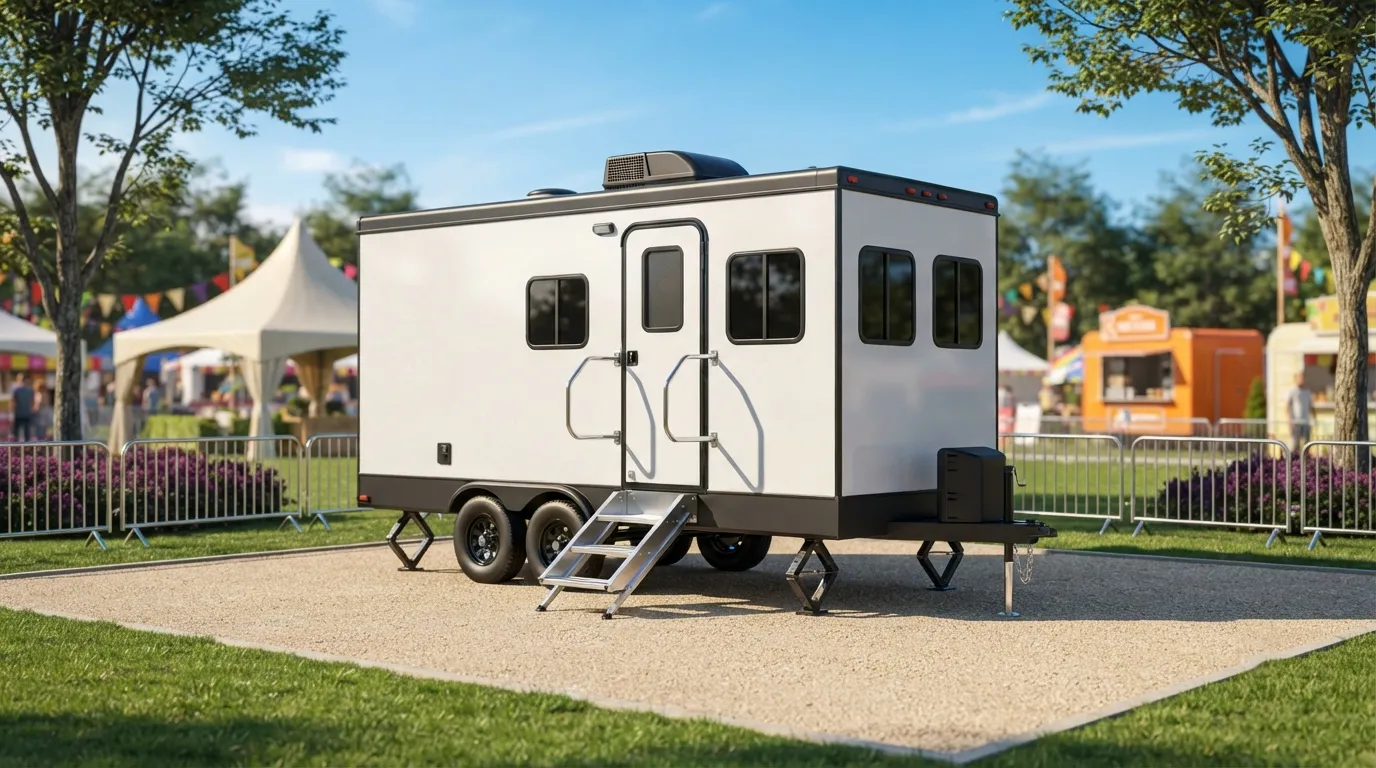
A construction site, a wedding, and a hillside trail race all need different hardware. The standard porta potty rental is the workhorse: about 44 by 48 inches on the ground, 92 inches tall, with a 60 to 70 gallon holding tank, built for job sites and casual events. Step up to a deluxe flushable porta potty for weddings or corporate gatherings where guests expect a flush handle and a sink. Any cluster of standard units also needs accessibility built in: ADA Standards section 213.2 requires at least 5 percent of clustered portable units to be accessible, never fewer than one, so pair your order with an ADA accessible porta potty rather than treating it as optional. For multi-day builds or festivals, a restroom trailer rental scales better than a row of single units; the 2 stall restroom trailer and 4 stall restroom trailer both work for crews under 50, while the 8 stall restroom trailer suits a festival crowd. Compare daily and weekly costs before you commit:
| unit | day | week | month |
|---|---|---|---|
| standard | $100-$350 | $130-$500 | $125-$325 |
| deluxe | $85-$1,200 | $150-$290 | - |
| ada | $200-$400 | $185-$240 | - |
| trailer | $175-$2,500 | $1,397-$1,650 | - |
Where should units be placed on site?
Placement decides whether your rental passes inspection and whether workers actually use it. ADA Standards section 403.5.1 requires a 36 inch clear route to any accessible unit, and section 405.2 caps ramp slope at 1:12, so skip the gravel berm and set units on a level pad. The door itself needs a 32 inch clear opening under section 404.2.3, and inside, a 60 inch turning circle per section 304.3.1 means the unit can't just be ADA-labeled, it has to actually turn a wheelchair. Ground surfaces matter too: section 302.1 calls for stable, firm, slip-resistant footing, which rules out loose mulch near a Yorba Linda hillside lot. Roll-off delivery has its own spatial rule worth knowing before you also order a roll-off dumpster rental: the truck needs roughly 60 feet of straight clearance behind it to set the box down safely. If you're placing units near a public sidewalk or street frontage, placement in the right of way needs confirming with the city; check our porta potty placement guide and porta potty permit requirements before delivery day, especially if the job sits near a Placentia border property line 5.6 miles west of central Yorba Linda.
How often does a unit get serviced?
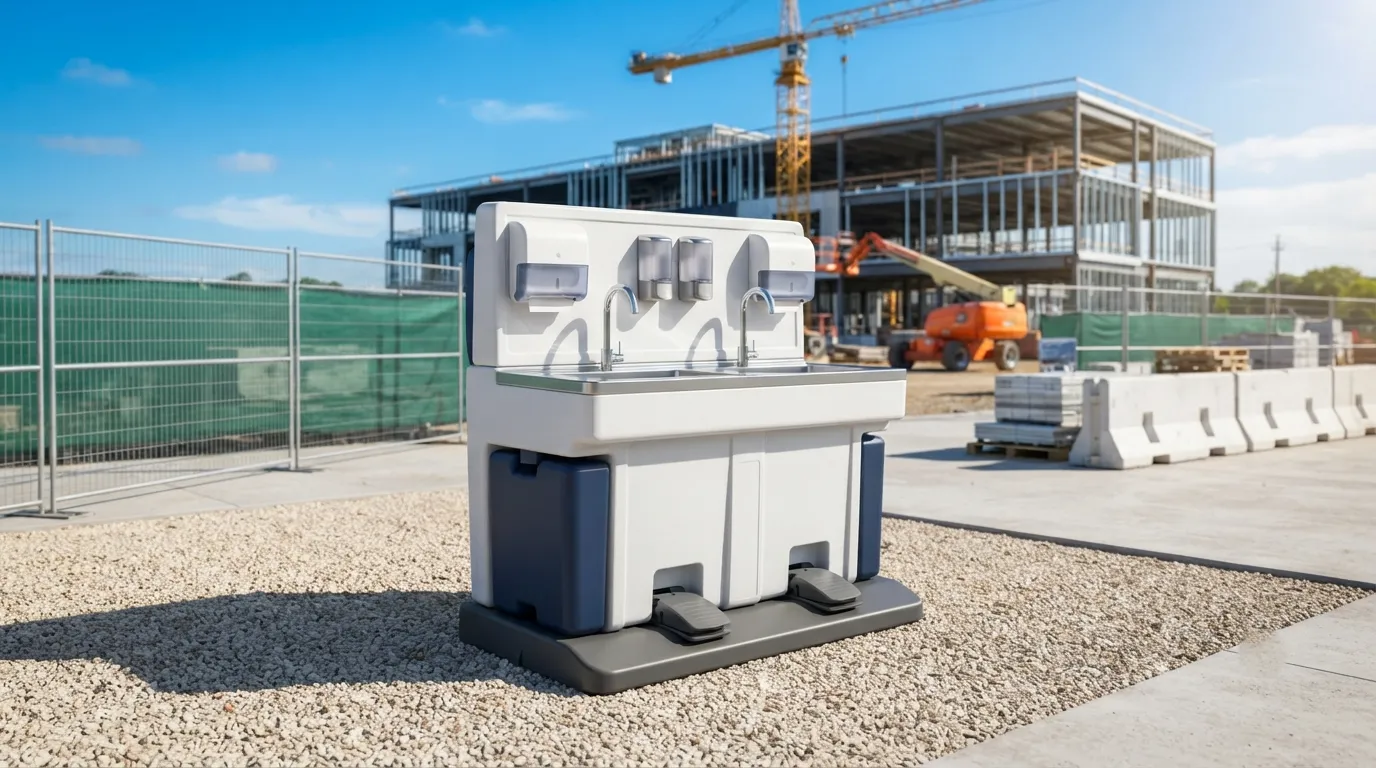
ANSI/PSAI Z4.3, the industry service standard, sets one visit per week as the baseline for up to 10 users over a 40 hour week; busier sites or events need more frequent pumping. Handwashing is a separate requirement from the toilet itself. 29 CFR 1910.141(d)(2) requires soap and towels or a hand-drying device at washing stations, hand sanitizer alone does not satisfy it, so pair any toilet order with a handwashing station rental or portable sink rental. If your crew is spraying paint, coatings, herbicides or insecticides, OSHA 1926.51(f)(1) kicks in separately and requires washing facilities for that contaminant exposure specifically, not general use. Grease-heavy job sites and restaurants pumping a grease interceptor should watch the 25 percent mark, fats, oils, grease and solids at a quarter of the liquid depth is the trigger point covered on our grease trap pumping page. Residential tanks run on a longer clock, typically pumped every 3 to 5 years depending on tank size and household, detailed further on how often to pump a septic tank. See our how often are porta potties cleaned page for the full service cadence.
Do I need a permit for a porta potty in Yorba Linda?
It depends on placement. Units on private property inside a job site typically don't trigger anything, but anything sitting in the public right of way, a sidewalk strip or street parking lane, needs confirming with the city before delivery. Check porta potty permit requirements or call ahead of your delivery date.
How far in advance should I book?
Standard units can often be delivered within a day or two; event season and weekends near Brea, 7.1 miles northwest, book up faster. Restroom trailers for weddings or festivals need more lead time given delivery logistics. Request a request a quote early if your date is fixed.
What if I run out of capacity mid-event?
Call and we can usually add a standard porta potty rental or extra ADA unit same-week. Emergency situations get faster turnaround; see emergency porta potty rental for that process.
Does a portable toilet need running water nearby?
No. Standard units are self-contained with a 60 to 70 gallon tank and need no plumbing hookup. OSHA 1926.51(a)(1) still requires potable water be available on site separately, often met with a jug station or handwashing unit.
Can I rent a dumpster and porta potty together?
Yes, most Yorba Linda job sites order both. Pair a roll-off dumpster rental with your toilet order and schedule delivery the same trip to save a stop; ask about combined delivery when you request a quote.
Next step
Get a delivery date
Tell us the address, the dates and the headcount. We size the order and confirm the route.