How fast can you deploy after a disaster?
Speed matters most in the first 48 hours. When a water main breaks or a wildfire evacuation shuts down a block in Yorba Linda, we prioritize emergency porta potty rental requests over routine bookings and stage units for rapid drop. A standard unit needs no plumbing hookup, just a stable, level spot, and ADA Standards section 302.1 calls for that surface to be firm and slip resistant, which matters when the ground is still wet from a burst pipe or storm runoff. We also carry holding tank rental options for sites where a septic system has failed outright and needs a bridge until repairs finish. If your water supply is compromised too, pair toilets with a handwashing station rental, since OSHA 1926.51(a)(1) requires an adequate supply of potable water at any occupied worksite, disaster response included. Crews coordinating relief work out of Placentia, 5.6 miles west, or Brea, 7.1 miles northwest, can reach Yorba Linda fast enough to support multi-site deployments without losing a full day to travel. For larger response camps, a restroom trailer rental gives responders and displaced residents something closer to a real bathroom, with running water and enclosed stalls, which counts for a lot after several days of stress.
What sanitation do shelters and relief camps actually need?
A shelter housing dozens of displaced residents needs more than a couple of toilets in the parking lot. OSHA 1926.51(c)(1) sets a baseline of one toilet facility for every 20 people, stepping up to one toilet seat and one urinal per 40 people once headcount passes 20, and that ratio is a reasonable starting point for planning a relief site even though it was written for construction crews. At least one unit in any cluster should be accessible: ADA Standards section 213.2 requires 5 percent of clustered single-user units to meet accessibility standards, with a minimum of one, and each of those needs a 60 inch turning circle per section 304.3.1 and a door opening at least 32 inches wide under section 404.2.3. We stock ADA accessible porta potty units built to that spec. Debris from damaged homes and downed trees also has to go somewhere, and a roll-off dumpster rental staged near the relief site keeps that waste from piling up next to where people are sleeping and eating. If the disaster involved sewage backup or standing floodwater, a septic pumping service call should happen before anyone tries to use existing bathrooms again. Storage matters too. Relief supplies, donated goods and equipment need somewhere dry and lockable, and a storage container rental or a mobile office trailer rental gives coordinators a base to work from.
Should you rent by the day or the week during recovery?
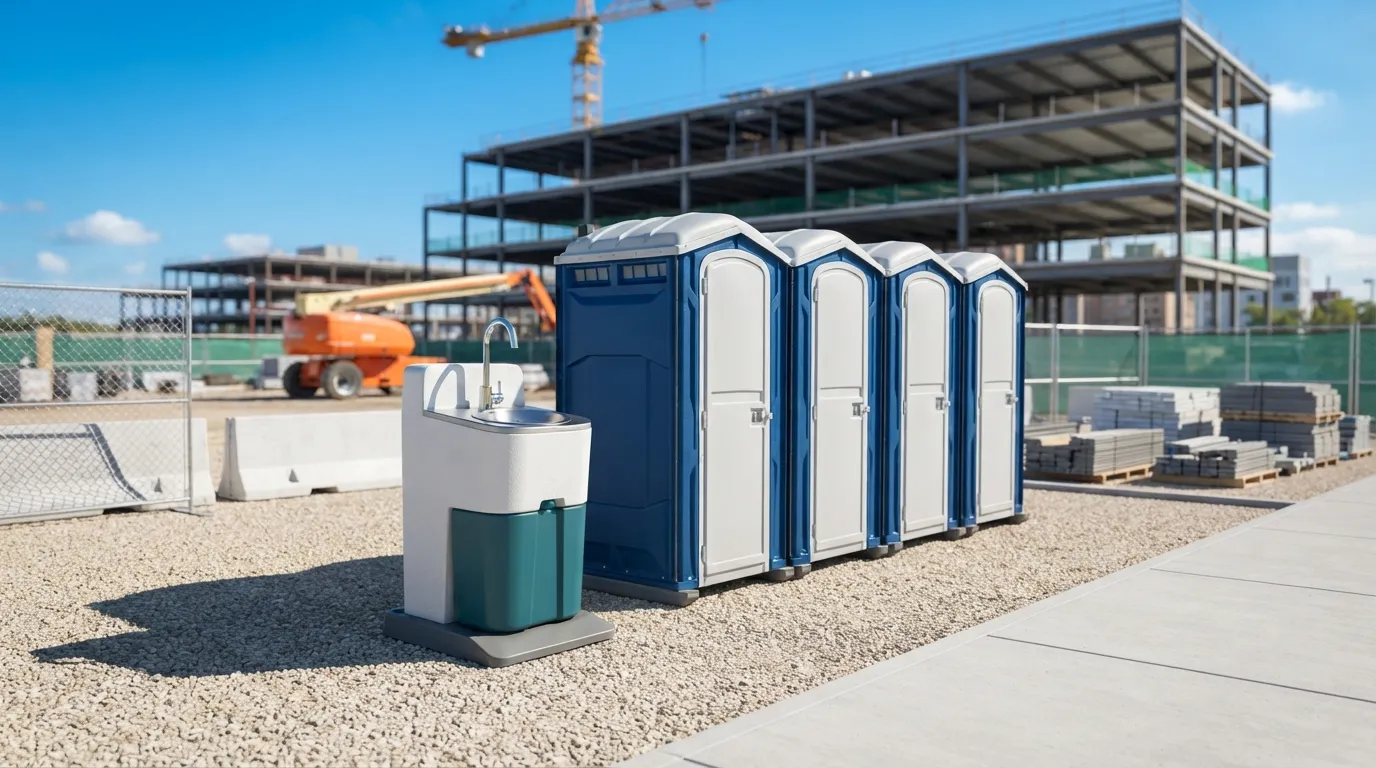
Recovery timelines are unpredictable, so flexibility matters more than the lowest daily number. A standard unit runs $100 to $350 for a single day, $130 to $500 for a full week, and $125 to $325 monthly if the response stretches into a longer rebuild, which happens often after major flooding or fire damage in Yorba Linda. Weekly and monthly rates spread the cost of a longer deployment better than repeated daily bookings.
| Unit | Day | Week | Month |
|---|---|---|---|
| Standard toilet | $100-$350 | $130-$500 | $125-$325 |
| ADA accessible | $200-$400 | - | - |
| Deluxe flushable | $85-$1,200 | $150-$290 | - |
Delivery itself is billed separately, typically $100 to $500 for a single-day drop depending on distance and access, with weekly delivery running lower per visit at $50 to $150. If you are not sure how many units a shelter or work camp needs, our how many porta potties do I need guide walks through headcount math, and the porta potty rental cost page breaks down what drives pricing beyond the unit itself. For sites needing both toilets and debris removal, check construction site services for the combined approach we use on active recovery sites.
What if the site has no power or lighting?
Relief work often continues after dark, especially during active flood response. We supply light tower rental units and a temporary power pole so crews and volunteers can keep working safely once the sun goes down.
Can you fence off a damaged or hazardous area?
Yes. A temporary fence rental keeps people away from unstable structures or debris piles, and chain link temporary fence panels install fast without anchoring into damaged ground.
Do you provide handwashing separate from toilets?
Yes, and it is often required. 29 CFR 1910.141(d)(2) calls for soap and towels or a hand-drying device at washing stations, since hand sanitizer alone does not satisfy that standard for a staffed relief site.
How do you bill for multi-week disaster response?
Weekly and monthly rates apply once a response passes a few days. Ask about consolidating toilets, dumpsters and fencing into one invoice through request a quote to simplify reimbursement paperwork.
What if flooding damaged an existing septic system?
Get it inspected before use. Warning signs are covered on our septic tank warning signs page, and a full pump-out often comes first via septic tank cleaning.
Next step
Get a delivery date
Tell us the address, the dates and the headcount. We size the order and confirm the route.