
How many restrooms does a race in Yorba Linda need?
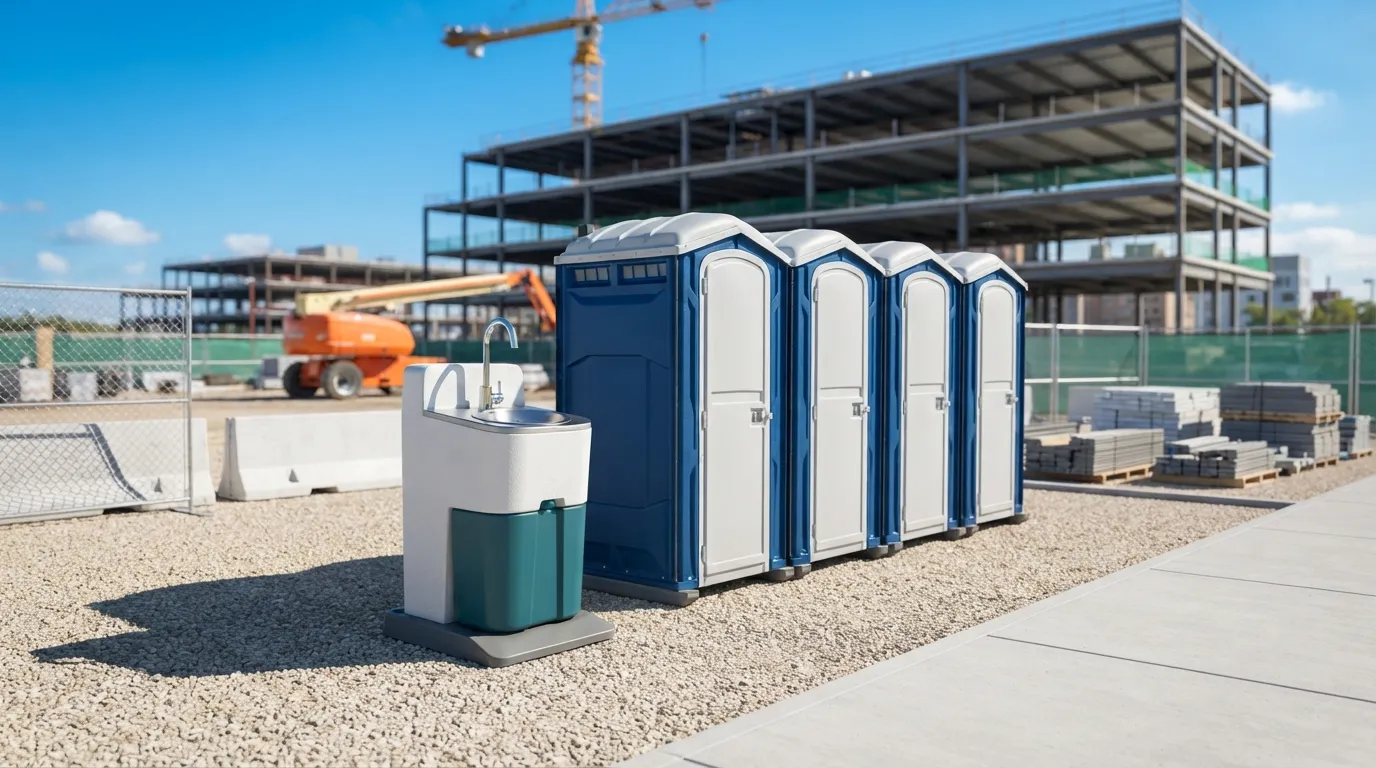
Start with runner count, then split it across the course instead of clustering everything at one line. A start corral of 800 runners wants a bank of standard porta potty rental units near the chute, plus smaller groups at each aid station so nobody walks a quarter mile off pace. OSHA 1926.51(c) sets crew ratios for job sites, not races, but race organizers in Yorba Linda still use it as a baseline: one toilet per 20 people covers a small volunteer team, and you scale up from there for spectators. Add at least one ADA accessible porta potty per cluster; ADA Standards section 213.2 requires 5 percent of clustered single-user units to be accessible, never fewer than one. A course with a finish festival needs more than toilets. Water tables and food vendors mean handwashing station rental units belong at every food line, since 29 CFR 1910.141(d)(2) calls for soap and towels, not just sanitizer, anywhere staff handle food. If your course also runs near Placentia, 5.6 miles west, or loops toward Brea, 7.1 miles northwest, tell us the mile markers so delivery trucks plan the route instead of guessing at race-morning traffic.
What about power and light for a pre-dawn start?
Most Yorba Linda races start before sunrise, which means timing tents, PA systems, and medical stations all need power before the sky helps at all. A temporary power pole handles that load without running extension cords across a runner corridor, and OSHA 1926.404(b)(1)(ii) requires ground fault protection on that circuit regardless of how temporary the setup feels. Knowing how to brace a temporary power pole matters more on race days than on a normal job site, because thousands of feet will pass close to the base within a few hours; crews set the pole plumb, back it with rated guy wires or a concrete-filled sleeve, and keep the guy lines outside the running lane entirely. Pair the pole with a light tower rental at the start line and any tunnel or underpass on the course, since OSHA 1926.56(a) sets minimum illumination for work areas and organizers use the same figures for safety at dark starts. Barricades along the corral and finish chute should meet ANSI D6.1 per OSHA 1926.202, which is also why temporary fence rental or a crowd control barrier rental makes more sense than rope and cones once a field gets past a few hundred runners.
Should a marathon rent a restroom trailer instead of standard units?
A restroom trailer earns its cost when the event has a VIP tent, a timing crew working twelve-hour shifts, or a finish festival with beer and food trucks. A restroom trailer rental with attendant service and running water reads better in sponsor photos than a row of standard units, and a 2 stall restroom trailer covers a small elite-athlete area while a 4 stall restroom trailer or 8 stall restroom trailer handles the general festival crowd. Weekend trailer rates in this market run from about $900 to $3,000 depending on stall count and service level, and a race that stretches into a Friday-through-Sunday expo weekend often lands closer to the top of that band. Standard units stay the workhorse for the actual course, since they set up fast at aid stations and pack out just as quickly once the last runner clears. Check the restroom trailer rental cost page or the porta potty rental cost page before you commit to a mix, and compare that against porta potty rental per day pricing if your race is a single Saturday morning event rather than a full weekend.
| unit | weekend price |
|---|---|
| standard | $125 to $400 |
| ADA | $199 to $300 |
| trailer | $900 to $3,000 |
Use the how many porta potties do I need guide to fine-tune counts once you have a confirmed runner field, and see the full event restroom rental page for setups beyond racing, like festival restroom rental or concert restroom rental needs that share the same equipment.
How far in advance should we book race-day restrooms?
Book as soon as the course map and runner cap are set, ideally 60 to 90 days out for a race over 1,000 runners. Vendors and light towers get reserved for weekend events across Yorba Linda fast, and last-minute orders risk a smaller unit mix than the course actually needs.
Do we need an ADA unit at every aid station?
Yes, at minimum one accessible unit per cluster. ADA Standards section 213.2 sets that 5 percent minimum, and a race with adaptive athletes or a wheelchair division should plan more than the minimum at the start and finish.
Can Yorba Linda Porta Pros service units mid-race?
Yes, servicing during a multi-hour event is standard for large fields. Crews time a mid-morning pump-out around your runner waves so units near the finish stay usable through the last finisher.
What size power pole does a timing tent need?
That depends on your equipment load; talk specifics with our crew before race day. A stable base and GFCI protection under OSHA 1926.404(b)(1)(ii) matter more than raw amperage for most timing setups.
Should restrooms go before or after the timing mat?
Place them before the mat when possible, so runners do not lose recorded time using them. Aid-station units usually sit just past the water tables, clear of the running lane and any barricade line.
Next step
Get a delivery date
Tell us the address, the dates and the headcount. We size the order and confirm the route.